₍^⸝⸝о ·̫ o⸝⸝ ^₎fempress.world
slow + dirty is...
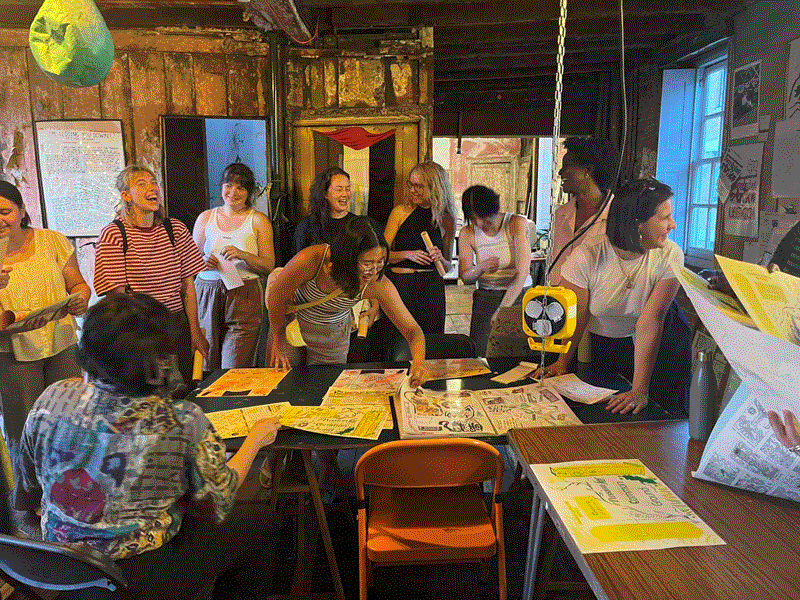

collectivising feminist publishing is...
fempress.world is...
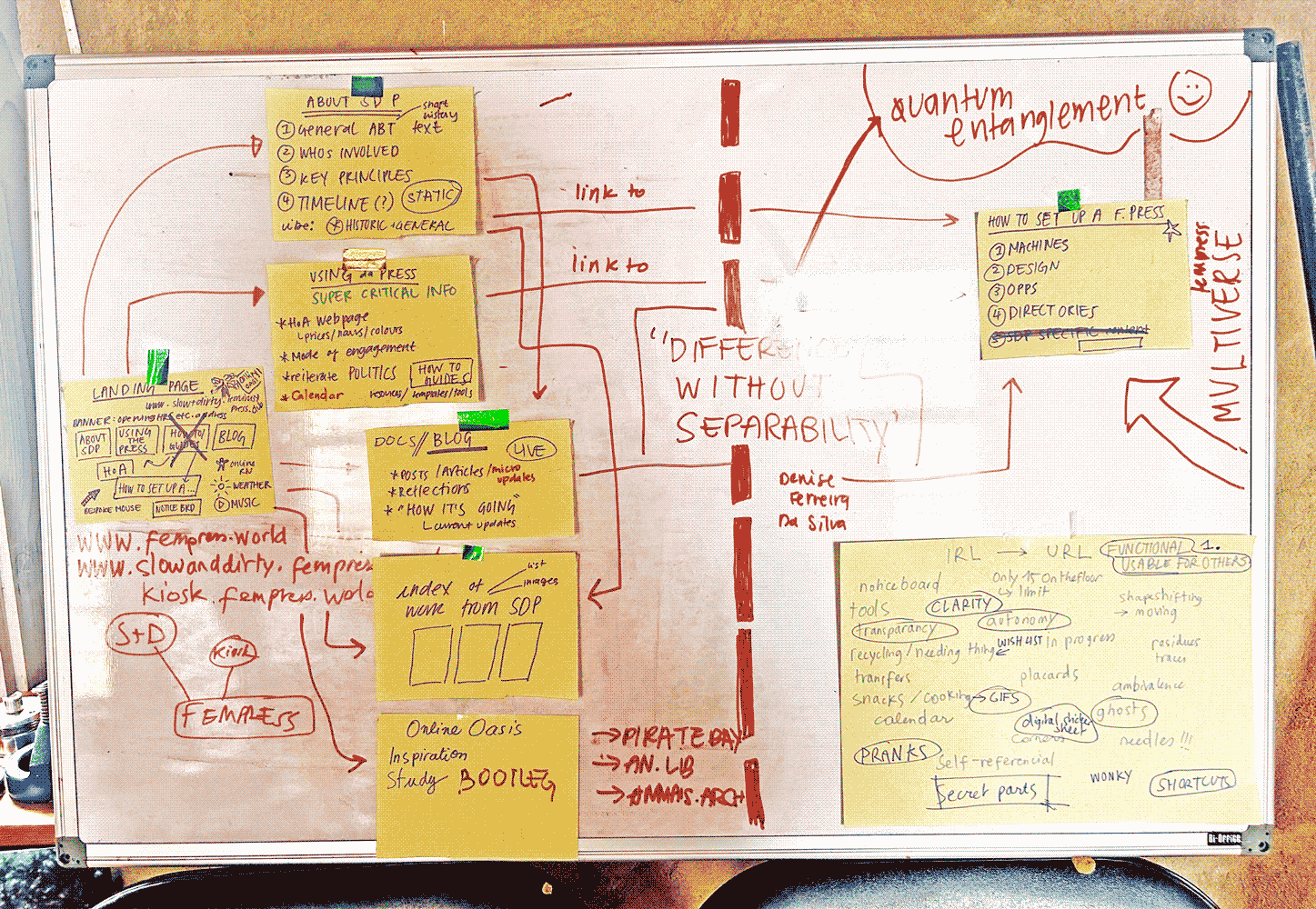
website to-dos:
〇 Setting up a community press
〇 How-to use the Risograph (and other machines in the space)
〇 How-to set up your print files
〇 Costs
〇 Solidarity Funds for printing
〇 Suppliers
〇 Calendar
〇 Online Oasis
*̩̩͙
*̩̩͙
*̩̩͙
*̩̩͙
.·͙*̩̩͙˚̩̥̩̥*̩̩̥͙ ✩ *̩̩̥͙˚̩̥̩̥*̩̩͙‧͙ .
_________ ׂׂૢ་༘࿐
Hello. Welcome to Slow + Dirty Press Collectivising Feminist Publishing #3
We have 45 minutes, and so we co-wrote a presentation that we're going to take you through by doing IRL text-to-speech with some ad-libs.
(sorry Anahi + Jemima are drama kids :), Anna isn't, she's just shining a light on the baddie back end)

SDP Collectivising Feminist Publishing #1 at MayDay Rooms as part of AntiUniversity 2024, here we were dreaming up what a feminist press do-it-together, open source, feminist press might be.
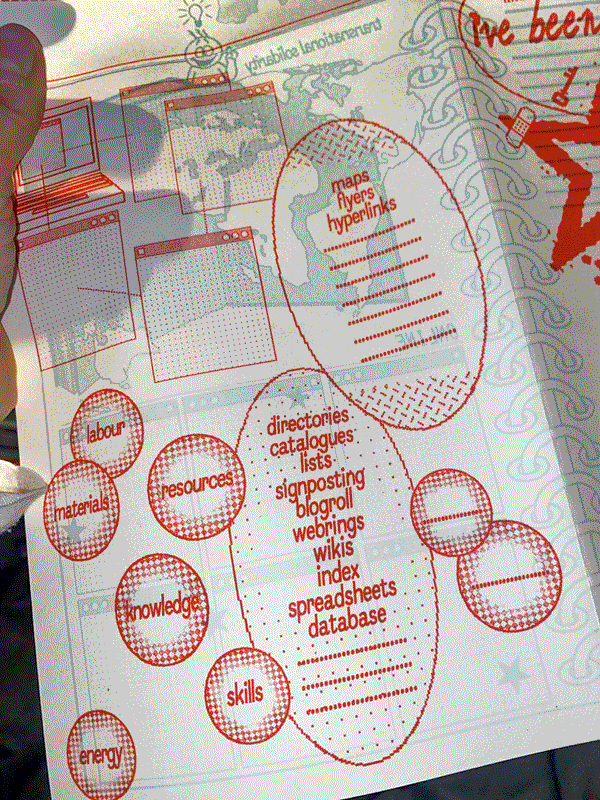
SDP Collectivising Feminist Publishing #2 at Pelican House as part of Materials Festival 2025 where we came together to make directories
This is our third thinkingoutloudgatheringworkshoptooshorttoactuallyhostarealdiscussion and what we'd like to share with you today is a project we've been working on called fempress.world
This is a wiki page that Anna will shortly talk us through that brings together many things we've been munching on over the past 3 years including:
an obsession with directories + yellow pages
a history of tumblr blogs and 90s tech, despite the #agegap
a desire to yap with other cute ppl online +offline
a scepticism of over professionalising printing work
a refusal to occupy online spaces via algorithms
a curiosity about word of mouth
a love for cutie web things
an anxiety that we should probably be recording this
a lack of order over our archives
a desire to share what we're learning
a love for blogs + things that go on for way too long
a want to be connected with sibling projects, share nerdy tips, hacks + cheat codes
and wanting to keep a family album : - )
In this process we want to find out:
HOW DO YOU DO OFFLINE ⇉ ONLINE ??
That is to say: How do we create an online space that mirrors how our physical space works in values and in process? How can this space help us run the in-person space with more ease, transparency, infrastructure, mutuality?
INSERT PICTURE OF PRESS FLOOR
But wait! HOLD ON! Who even are we?
[clears throat]
We are a work-in-progress queer feminist community press currently in residence at House of Annetta (London, UK) a hub for spatial justice work. We've come together to find out what could be when a press is founded on resource sharing, mutual support, companionship, comadreo, transmission, circulation, political alliances, multi-disciplinarity and collectivised knowledge.
We are interested in creating community infrastructure that provides space to seed interconnected autonomous print projects.
Currently stewarded by Anna, Anahi, Jemima, Ayshe-Mira, Iris, Jess, Amo + other hunnies that come and go (but mostly come!). Everyone involved is a volunteer, and outside of us three, was fully introduced to Riso + press things via the press + our press nights!
へ ╱|、 ♡
૮ - ՛ ) (˚ˎ 。7
/ ⁻ ៸| |、˜〵
乀 (ˍ, ل ل じしˍ,)ノ
Up to this point, the culture of the press has been primarily offline, with weekly in-person drop-ins where anyone working on a publishing project can come and work with others at any stage of their process, monthly inductions on how to use a Risograph - the idea is once groups have been inducted, they can come back on any future Press Night to use the printer!
We support projects that engage with social and spatial justice by offering at cost or low cost printing in addition to hosting the space for making, sharing skills/ ideas, making friends, eating together...
The project is unfunded and run by volunteers, made possible by solidarity fee donations & reciprocity and skill-sharing.
Our comms exist primarily in our paper newsletter, flyers and IRL signage.
We're really NOT ONLINE! On top of that, Anahi + Jemima are not tech people at all.
And so what comes of all of these questions, interests, obsessions, and Anahi+Jemima's inability to code?
fempress.world is born, as of this week, we own the domain 😎
[Anna enters via URL code, digital stage left]
fempress.world intro (mall) - WIRE FRAME
Today we want to share with you our thinking towards fempress.world
Starting with a couple questions --
¿ NO ZINE GODS ?
A long term question in our mind around publishing is that there is some kind of emphasis on the individual or the independent
.
As people, projects, artists, designers etc who work on the "margins" of formal publishing spaces, what does it mean to create within cultures that celebrate of individualised
publishing work?
Do It Yourself
Independent Publishing
On the one hand, peripheries and independent spaces are crucial to developing work that can engage differently, there is also rich histories of punk/ anarchic practice here --
we don't need you to make this shit happen.
But slow + dirty press kind of came to be because, actually WE DO need things to make things happen. We may not need 'institutions' but we need each other.
writerseditorsbookbinderspapermakerswebsitebuilderszinestallholderscornershopprinterspapersellerssuppliersdantherisomanthatonepersonwiththereallygoodguillotinesomeonewhocanshowyouwheretogetgoodstationarythebooksellersthatstockourthingsillustratorsandeveryonewhoreadsourbooks
slow + dirty press in many ways came out of an experience of:
loneliness
a refusal to believe that we must all do everything ourselves
an exhaustion at having to pretend that we can just youtube every single problem and learn how to do it all ourselves.
We're a feminist queer printer not just because of the formation's ID but also because there is a praxis of feminism in how the press WORKS.
Why should I spend £500 on a riso course?
Why should I pay for InDesign? Why should I learn Photoshop? Why should I have a printer just for myself?
Who has the moneytimespaceenergy to do it all anyway?
Why should we keep any information that we do have from eachother?
Who gets to call themselves "independent"?
:(
Resources go beyond literal infrastructure (although that is one of our fave types of resource!)!
We are also each other's resources. We are not infinite but there is a kind of abundance there if we learn how to use it (and how not to extract it!).
We are not making the point that we should all become one, there is a need for all of us to be working somewhat autonomously,
to be discussing,
disagreeing,
falling in love,
being inspired
finding out what gives us the ick.
We want to know what this porous line of collectivism and autonomy feel like:
In the words of philosopher Denise Ferreira da Silva:
DIFFERENCE WITHOUT SEPARABILITY
[Denise Ferreira da Silva]
we are different from each other, we cannot flatten this difference, but that does not stop us from being connected to the entangled WHOLE.
AUTONOMOUS + INTERDEPENDENT
This abundance, this DE-INDIVIDUALISATION of how we work, this REFUSAL to perform the role of genius, of independent, of disconnected, of expert, brings us to our next reflection...
In the West, the individual as a liberal democratic subject and point of departure for aesthetic experience remains central in the space of art. This emphasis on the individual is [...] what renders that space structurally right-wing...
[Marina Vishmidt]
This is true of, eg: commercial galleries, institutionalised spaces etc but why do we assume that this is being deconstructed in so-called marginal spaces/ independent spaces etc?
Spaces that purport to be politically engaged?
How (beyond ideology) do these spaces facilitate a rupture in this neoliberal thinking?
And is it possible that even within these alternative spaces we are just reproducing neoliberal dynamics and calling it anticapitalist, just because we're trading in zines rather than in BITCOIN or "Art" with a capital A?
MAKEMENTS MAKE MOVEMENTS NOT STATEMENTS!?
[Annetta Peddretti]
The fetish of the individual (artist or citizen) and the sanctity of the individual’s property rights to their speech and creative imagination should be seen as both a result of and a compensation for the suppression of thinking in terms of community, collectivity, or trans-individual responsibility that decades of neoliberal ideology, as enforced by the conditions of everyday life, have established as the absolute bedrock of whatever social contract we can still talk about... Fascists mobilize the fetish of the sovereign individual to organize wounded individuals who feel their rights are being infringed.
[Marina Vishmidt]
To some extent, we think this could be why some spaces feel icky!
Even if they're indie
Even if they're independent
Even if they're politicised
Even if they're alternative
Even if they're 'anti-capitalist'
It is why in our Multitudes application we say:
"We are a feminist collective committed to redistributing resources to projects and narratives that sit outside (and actively resist) those over-represented within the independent publishing sphere, in particular the dominance of de-politicised work in in graphic design and fine art, that foregrounds individual practice over collective values.
We recognise that much of the design, print and community labour carried out by FLINTA practitioners is made invisible, especially when this work happens collectively, in service of movements rather than individual recognition."
[REDACTED] Let's set the scene: We need a banner designed but all the people are busy making zines about [insert latest catastrophe here] and are unavailable, these people then go to sell these at a zine fair for a premium of £15. They are then invited to speak on panels about solidarity and publishing. [REDACTED]
slow + dirty press is thinking of how to address this, through a practice that questions what we
might be reproducing through an over-emphasis on ideas of "independence" (both in how we work and how we move as art workers) that do not ideologically or structurally intervene within existing right wing logics that often render art work (even critical art work) useless within revolutionary movements.
FORM > PROCESS
What would it mean to interrupt this mode of working?
What resources would we need?
Yes we have no money, yes we're precarious but could we be getting lost in this "precarity" and digging ourselves into a deeper whole, even within our radical projects?
What kind of ego shifts would this require in our work?
How does this fall along gendered lines (and others too)?
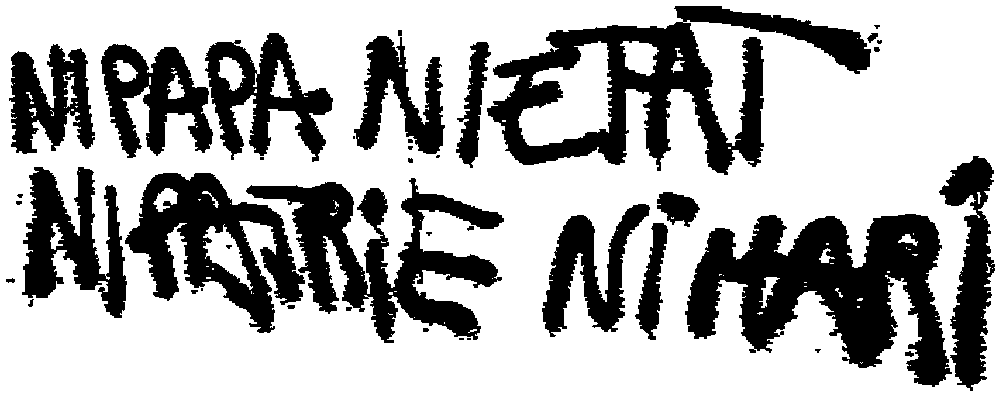
NI PAPA, NI ETAT, NI PATRIE, NI MARIE
NI ROI DU ZINES
NO ZINE GODS
ty to our divas:
Vishmidt, Marina; and Ah, Ernest. 2020. New Ruins. In: Natascha Sadr Haghighian and Ernest Ah, eds. beyond repair. Berlin: Archive Books. ISBN 9783948212421 [Book Section]
chat in slow + dirty's forum:
sign slow + dirty's guestbook: